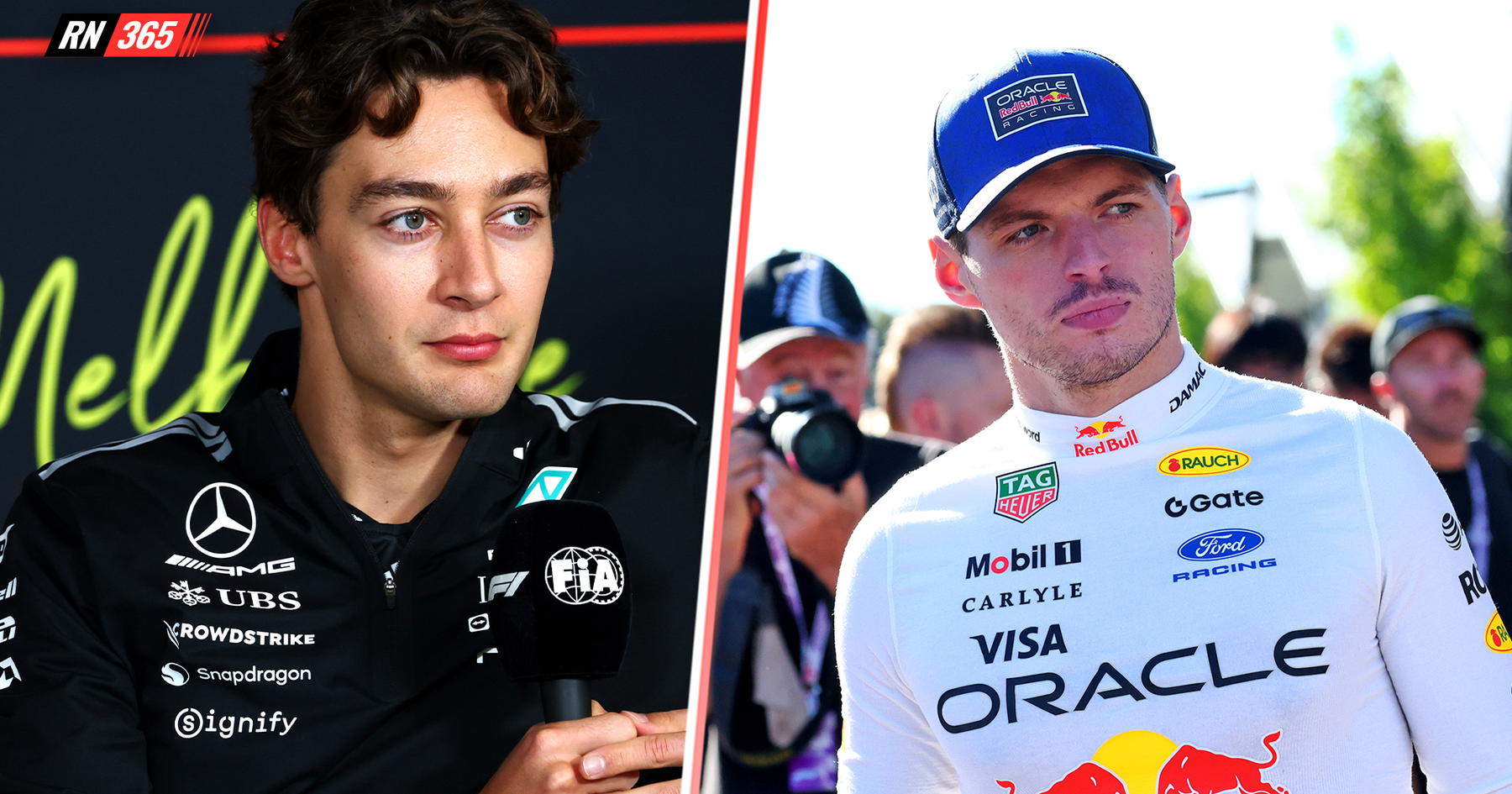
Russell Predicts Red Bull F1 Dominance Until 2026: Why Teams Struggle
In the high-octane world of Formula 1, competitive equilibrium is a perpetually elusive dream. Despite significant efforts to level the playing field through stringent regulations, one team continues to reign supreme: Red Bull Racing. Mercedes driver George Russell has voiced profound concerns and made a stark prediction regarding this dominance, suggesting that their rivals' advantage could stretch all the way to the 2026 season. His insights not only highlight the ongoing struggles of other teams but also spark a crucial debate about the effectiveness of F1's current regulatory framework, particularly the cost cap and aerodynamic testing rules.
Russell's observations began even before the season officially kicked off, noting Red Bull's seemingly inconsistent performance during pre-season testing. "I think Red Bull looked suspiciously slow in the second test, to be honest. We had them down as arguably the quickest in the first test," he remarked. This early indication of potential "sandbagging" – deliberately underperforming to obscure true pace – only intensified the speculation surrounding Red Bull's formidable capabilities.
The Enduring Puzzle of Red Bull's Dominance: George Russell's Concerns
Since the advent of the current ground effect regulations, Red Bull Racing has achieved a truly staggering level of success. Out of 50 races, the Milton Keynes squad has secured an astonishing 42 victories, with their star driver, Max Verstappen, claiming 38 of those. This overwhelming triumph paints a vivid picture of a team operating on a different plane compared to their competitors. To put this into perspective, Mercedes, a team that enjoyed its own era of unprecedented dominance, has managed only a single win in this period – by George Russell himself at the 2022 Brazilian Grand Prix.
This stark contrast in performance leaves many, including Russell, questioning the current state of affairs. As a key figure at Mercedes, and soon to be the leading driver with Lewis Hamilton's departure, Russell's perspective carries significant weight. He emphasizes the continuous uphill battle faced by teams like Mercedes, Ferrari, and McLaren in their quest to close the monumental gap to Red Bull.
For more on Russell's initial observations, read: George Russell Questions Red Bull's 'Suspicious' F1 Pace.
The Cost Cap Conundrum: Is F1's Financial Brake Failing?
A cornerstone of Formula 1's modern regulatory landscape is the cost cap, introduced in 2021 with the express goal of curtailing spending and fostering a more equitable competitive environment. The idea was simple: by limiting the financial resources available to teams, the playing field would naturally level out, preventing larger, richer teams from simply outspending their rivals into submission.
However, Red Bull's continued dominance has led George Russell to openly question the effectiveness of the F1 Cost Cap. He asks whether the financial regulations need to be "more aggressive." Russell articulated his concerns, stating, "I think the changes that we're seeing in the regulations with the cost cap, with the wind-tunnel time, it is going to bring the field closer together, but does it need to be more aggressive? I don't know, because at the moment, nobody is catching Red Bull either with these things in place, but we just need to focus on ourselves, and keep doing the best job possible."
The sentiment highlights a critical challenge: while the cost cap may prevent unchecked expenditure, it hasn't, at least not yet, broken the cycle of dominance. One hypothesis is that early advantages gained before or just as the cap was fully implemented are incredibly hard to erase. Teams like Red Bull, with a stable technical team and a clear design philosophy established pre-cap, might be maximizing their allowed spending more efficiently than others still finding their footing. They've effectively "baked in" performance that smaller budgets can now only incrementally improve upon, rather than fundamentally overhaul.
Aerodynamic Alchemy and Wind Tunnel Wars: A Losing Battle?
Beyond the cost cap, another key regulatory adjustment designed to promote competitive convergence is the sliding scale for wind tunnel time. Implemented since 2022, this rule strategically limits a team's aerodynamic testing and computational fluid dynamics (CFD) usage based on their previous season's standings. In theory, the more successful a team is, the less development time they get, giving less successful teams a much-needed boost in their pursuit of performance.
Yet, like the cost cap, this measure has seemingly done little to curb Red Bull's incredible lead. The russell questiona red bull narrative extends to these technical regulations as well. Despite having significantly less wind tunnel time than their rivals, Red Bull continues to produce an exceptionally well-engineered and dominant car. This suggests a few possibilities:
- Efficiency of Development: Red Bull's aero department, led by Adrian Newey, might simply be incredibly efficient at utilizing their limited resources. Their processes, tools, and talent could be so refined that they extract more value from fewer hours than other teams do from greater access.
- Design Philosophy Strength: The core design philosophy of the RB19 and RB20, particularly around ground effect aerodynamics, might be so fundamentally strong that it provides an inherent advantage that simply cannot be overcome by competitors, regardless of testing allowances.
- Early Advantage Compounding: An early, significant advantage allows a team to spend subsequent, limited development time on refinement and understanding, rather than fundamental problem-solving. This compounds their lead, making it even harder for others to catch up.
For struggling teams, this presents a particularly frustrating scenario. Despite regulatory mechanisms explicitly designed to help them, the gap remains. This leads to the fundamental question of whether the rules are truly aggressive enough to counteract an established era of supremacy.
A Glimpse to 2026: The Long Road to Challenging Red Bull
Perhaps the most sobering part of Russell's commentary is his realistic timeline for when Red Bull might finally face a serious challenge. He estimates that their advantage could persist until the radical regulation overhaul scheduled for 2026. "We need to try and bring ourselves further up the order, but also being realistic that Red Bull is a long way ahead of everybody, and it may not be until 2026 that they have a real challenge for the title," Russell stated.
This prediction underscores a deep understanding of the sport's dynamics. Major regulation changes, like those coming in 2026 (including new power unit regulations), typically offer the best opportunity for a reset. They can render previous design philosophies obsolete and force all teams to start from a relatively blank slate, redistributing the competitive landscape. For teams currently languishing behind, this three-year outlook means a prolonged period of playing catch-up, focusing on incremental gains and hoping for a breakthrough under the new rules.
The implication for the intervening seasons is clear: other teams must focus internally, perfecting their own operations, maximizing their existing car's potential, and strategically allocating resources towards the significant rule changes looming in 2026. It's a pragmatic approach born out of necessity, acknowledging the current impossibility of genuinely challenging Red Bull for outright title contention.
F1's Cyclical Nature: A Historical Perspective and Future Hopes
Russell's analysis isn't just about the present; it's steeped in Formula 1's rich history. He candidly admits that it might have been "naïve" to believe the cost cap alone would fundamentally alter the sport's natural ebbs and flows. He reminds us of the long-standing pattern of dominance:
- "When you join a team like Mercedes, we're all here to win, and that is the same for Ferrari and McLaren as well," Russell explained. "It was the same for Red Bull during the Mercedes dominance era, and unfortunately, this is Formula 1. You always see dominance, if you look at 30 years ago, you had Williams dominating, you had McLaren dominating, then it was Ferrari who dominated and then Red Bull, then Mercedes."
This historical perspective highlights that periods of supremacy are not an anomaly but rather a recurring feature of Formula 1. Factors contributing to these cycles often include:
- Stable Technical Regulations: Once a team cracks the code under a specific set of rules, stable regulations allow them to refine and optimize their advantage year after year.
- Exceptional Talent (Driver & Technical): The combination of a generational talent behind the wheel (like Verstappen) and a visionary design team (like Adrian Newey) is often unbeatable.
- Team Cohesion and Culture: A winning culture, strong leadership, and seamless teamwork foster an environment where continuous improvement thrives.
- Financial Strength and Strategic Investment: Even with a cost cap, strategic and efficient use of allocated funds can make a huge difference.
While the prospect of prolonged Red Bull dominance may be frustrating for fans of other teams, it also sets the stage for a dramatic shift in 2026. The new regulations represent a beacon of hope for Mercedes, Ferrari, McLaren, and others to finally break the cycle. Until then, the challenge for every other team remains immense: to learn, adapt, and prepare for their next opportunity to seize the crown.
What Teams Can Do Now
Despite the grim prediction, teams aren't simply throwing in the towel. Practical strategies include:
- Maximize Current Package: Extract every ounce of performance from the existing car through setup optimization, operational excellence, and strategic race management.
- Targeted Development: Focus development efforts on areas that provide the biggest return on investment within the current regulations, avoiding costly dead ends.
- Invest in 2026: Gradually shift resources, both human and financial (within cost cap limits), towards the radical new regulations. Early understanding and innovation for 2026 will be crucial.
- Driver Development: Nurture and retain top driving talent, as a strong driver lineup will be essential for capitalizing on future opportunities.
- Team Morale: Maintain a positive and resilient team culture, reminding everyone that cycles of dominance eventually end, and their time will come.
George Russell's candid assessment of Red Bull's F1 dominance, extending potentially until 2026, serves as a stark reminder of the monumental challenge facing other teams. His questioning of the current cost cap and aerodynamic regulations underscores a broader debate about F1's ability to truly level the playing field. While Red Bull's current supremacy reflects F1's cyclical nature, it also highlights the ingenuity required to maintain such a lead despite rule makers' best efforts. For now, the sport watches, waits, and prepares for the significant changes of 2026, hoping they finally usher in a new era of closer competition and break Red Bull's formidable reign.