F1 Cost Cap Under Fire: Russell Doubts Red Bull Dominance Halt
Formula 1, the pinnacle of motorsport, has always been a theatre of technological innovation, daring driving, and, inevitably, intense financial competition. In recent years, the sport has attempted to rein in escalating budgets through the introduction of a cost cap, aiming to foster a more level playing field and inject unpredictability back into the championship. Yet, as Red Bull Racing continues its breathtaking streak of success, questions are mounting about the effectiveness of these financial regulations. At the forefront of this discussion is Mercedes driver George Russell, whose candid remarks have ignited debate, particularly regarding his observations of Red Bull's performance and the implications for the sport's competitive balance. Russell's insights suggest that despite significant regulatory shifts, breaking Red Bull's stranglehold might be a more arduous and prolonged battle than initially hoped.
The Promise and Pitfalls of the F1 Cost Cap
The F1 cost cap, initially introduced in 2021 and subsequently adjusted, was a landmark regulation designed to curtail spending and promote sustainability within the sport. Its primary objective was to prevent the wealthiest teams from simply outspending their rivals into submission, thereby ensuring a more competitive landscape. Complementing this, a sliding scale for aerodynamic testing regulations (ATR) was implemented in 2022, strategically limiting wind tunnel time and computational fluid dynamics (CFD) usage based on a team's previous season's standings. This meant that less successful teams would have more development opportunities, theoretically accelerating their catch-up process.
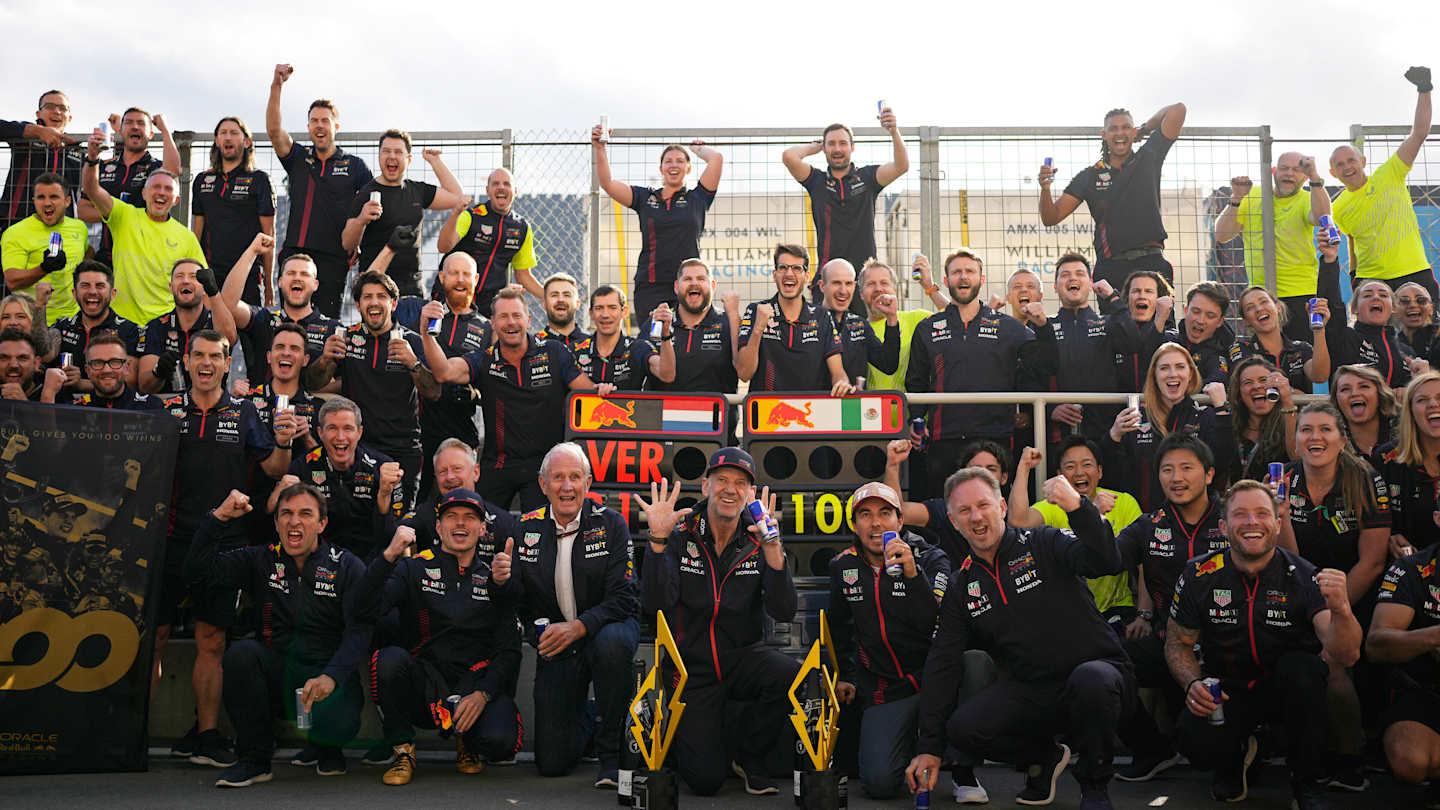
On paper, these measures promised a golden era of close racing. However, Red Bull's performance since the adoption of ground effect regulations in 2022 tells a different story. The Milton Keynes squad has secured an astonishing 42 victories out of 50 races, with Max Verstappen personally clinching 38 of these. This overwhelming dominance stands in stark contrast to Mercedes' single win in the same period, achieved by George Russell at the 2022 Brazilian Grand Prix. For many, including Russell, this disparity raises a critical question: is the cost cap truly working as intended, or does it need to be more aggressive?
The challenge lies in the complex interplay of factors that contribute to F1 success. While the cost cap limits annual expenditure, it doesn't erase years of accumulated knowledge, infrastructure, and top-tier personnel. A team with a historical advantage in research and development, combined with a stable technical leadership, can often extract more performance from a limited budget than a team playing catch-up. Furthermore, early mastery of new regulations, as Red Bull demonstrated with the ground effect cars, provides a significant head start that is incredibly difficult to overcome, even with subsequent limitations on spending and testing.
Russell's "Suspicious" Observations and Sandbagging Claims
George Russell's scrutiny of Red Bull extends beyond the cost cap's long-term implications. Before a recent season, he publicly voiced George Russell Questions Red Bull's 'Suspicious' F1 Pace, particularly during pre-season testing. "I think Red Bull looked suspiciously slow in the second test, to be honest," Russell stated. "We had them down as arguably the quickest in the first test." This comment alludes to the strategic practice of "sandbagging" – where teams intentionally hold back their true performance during pre-season or practice sessions to avoid revealing their full potential to rivals. By running less aggressive engine modes, higher fuel loads, or less optimal car setups, teams can mask their speed, encouraging competitors to misinterpret the pecking order and potentially delay their own development focus.
While sandbagging is a common tactic in F1, Russell's observation highlights a deeper concern: if the leading team can afford to mask its performance even during pre-season, their ultimate advantage must be substantial. This makes it harder for rival teams to gauge the true gap they need to close, further complicating their development strategies. It suggests a level of confidence and a buffer in performance that allows Red Bull to play strategic mind games, adding another layer of challenge for their competitors trying to decipher the true pecking order.
The Cyclical Nature of F1 Dominance: A Historical Perspective
Russell, poised to become a leading figure at Mercedes, offers a pragmatic and historically informed view on the current situation. He acknowledges that Formula 1 has always experienced cycles of dominance, a phenomenon that perhaps makes it "naïve of us to believe that a cost cap would bring change to the natural ebbs and flow of the sport." He cites historical examples: the Williams era, McLaren's periods of supremacy, Ferrari's dominance with Michael Schumacher, and Mercedes' own unparalleled run before Red Bull's current reign. Each period was characterized by a combination of exceptional talent, revolutionary car design, and often, stable regulations that allowed a leading team to perfect its package.
This understanding leads Russell to a sober prediction: Russell Predicts Red Bull F1 Dominance Until 2026: Why Teams Struggle to mount a serious challenge for the title. "We need to try and bring ourselves further up the order, but also being realistic that Red Bull is a long way ahead of everybody, and it may not be until 2026 that they have a real challenge for the title," he articulated. This isn't just a lament; it's an acknowledgment of how deeply ingrained a competitive advantage can become. A dominant team not only benefits from a superior car but also from the momentum, confidence, and resource allocation that comes with winning. They attract the best talent, operate with peak efficiency, and can focus on incremental gains while others are still grappling with fundamental issues. The next major regulation change, set for 2026 with new engine rules, is often seen as the most likely catalyst to reshuffle the pecking order, offering a clean slate for all teams.
Bridging the Gap: What Can Teams Do?
While Russell's outlook is realistic, it doesn't imply resignation. For teams like Mercedes, Ferrari, and McLaren, the challenge is immense, but not insurmountable. Here's how teams can navigate an era of dominance under a cost cap:
- Hyper-Efficiency in Development: With financial constraints, every dollar spent must yield maximum performance. This requires meticulous planning, advanced simulation tools, and a highly streamlined development process to avoid costly dead ends.
- Strategic Talent Acquisition and Retention: Attracting and retaining top engineering talent is crucial. A brilliant technical director or chief aerodynamicist can be worth more than raw financial power under a cap.
- Exploiting Regulatory Nuances: Teams must constantly search for innovative interpretations or subtle loopholes within the regulations. Red Bull itself found a groundbreaking solution with its ground effect concept, showcasing the power of creative design.
- Focus on Driver-Car Synergy: Optimizing the car around the specific strengths of their drivers can unlock extra tenths. Driver feedback loops become even more critical in fine-tuning a car's handling and balance.
- Long-Term Vision vs. Short-Term Fixes: Instead of chasing Red Bull's current philosophy, teams might need to commit to their own long-term design principles, aiming for a step change when the next major regulation overhaul arrives.
- Pressure on FIA for Further Adjustments: While the FIA aims for stability, sustained dominance often leads to calls for rule tweaks to re-balance the field. Teams can advocate for changes that might subtly disadvantage the leader without fundamentally altering the sport.
The core advice for teams trailing Red Bull is to focus relentlessly on self-improvement. As Russell said, "we just need to focus on ourselves, and keep doing the best job possible." This means perfecting every aspect of their operation, from pit stops to strategy calls, while concurrently developing a fundamentally faster car. The cumulative effect of these incremental gains, combined with a potential breakthrough innovation, is their best bet for challenging the current titans.
Conclusion
George Russell's candid questioning of the F1 cost cap's effectiveness and his "suspicious" observations regarding Red Bull's pace underscore a pervasive sentiment within the paddock. While the cost cap and aerodynamic testing regulations were designed to bring the field closer, Red Bull's overwhelming dominance suggests these measures might not be aggressive enough to curb the advantages gained from a head start in a new regulatory era. Russell's realistic projection of Red Bull's continued supremacy until at least 2026 highlights the deep-seated cyclical nature of dominance in Formula 1. For rival teams, the path forward involves an unwavering commitment to efficiency, innovation, and strategic long-term planning, striving to close the gap one tenth at a time, and perhaps, waiting for the next major regulation change to truly level the playing field once more. The battle for F1 supremacy is far from over, but as Russell aptly points out, it will require immense dedication to overcome the current juggernaut.