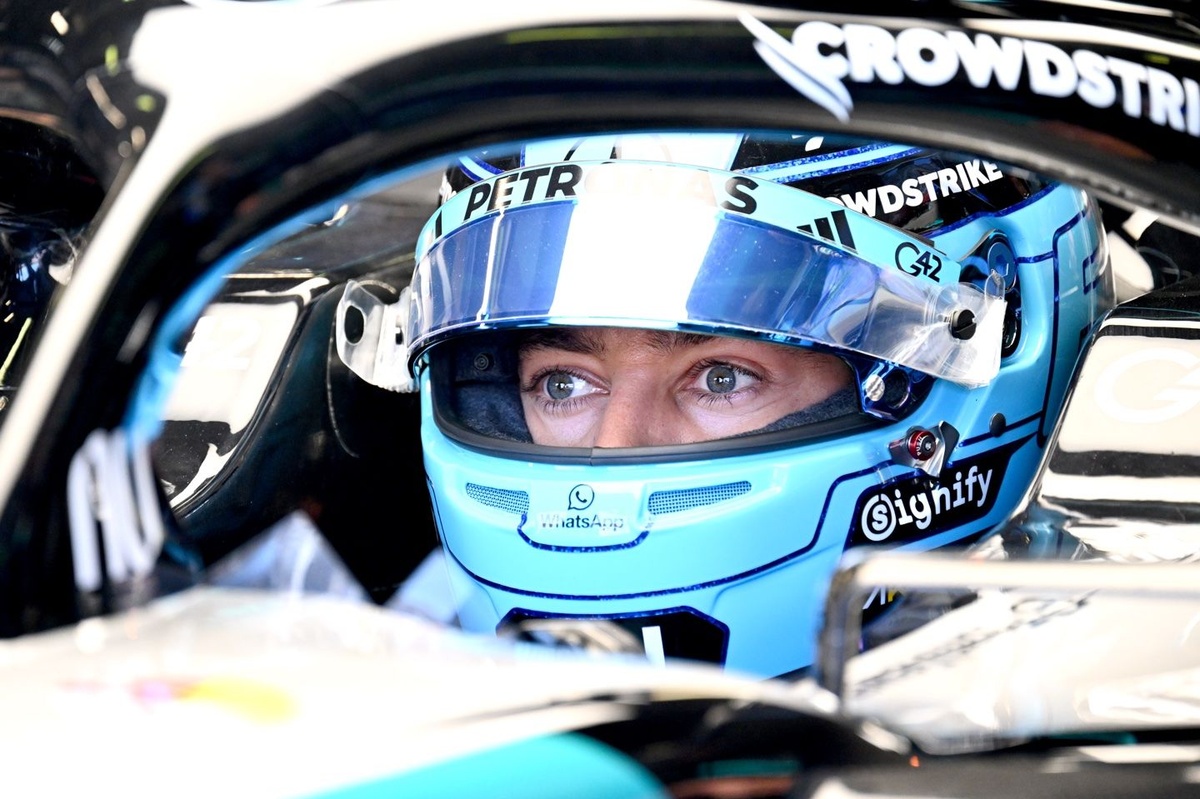
George Russell Questions Red Bull's 'Suspicious' F1 Pace and the Efficacy of Cost Cap Regulations
George Russell, a prominent voice from the Mercedes-AMG Petronas F1 Team, has once again sparked debate within the Formula 1 paddock, publicly questioning Red Bull Racing's seemingly unassailable dominance. His recent remarks delve into two critical areas: Red Bull's enigmatic pre-season testing performance and the broader effectiveness of F1's financial and aerodynamic regulations, particularly the much-discussed cost cap. The sentiment, often summarized by fans and media as a pointed *russell questiona red bull*, highlights a growing concern about the competitive equilibrium of the sport. Russell's insights offer a candid look at the challenges facing rival teams and ignite discussions about the future direction of Formula 1's competitive landscape.
Unpacking the 'Suspicious' Pre-Season Pace: The Art of Sandbagging?
Russell's initial observations pointed towards a curious discrepancy in Red Bull's pre-season testing form. "I think Red Bull looked suspiciously slow in the second test, to be honest. We had them down as arguably the quickest in the first test," Russell stated. This comment immediately fueled speculation about "sandbagging"—a common, yet highly strategic, practice in Formula 1 where teams deliberately hide their true performance capabilities during testing.
Why would a top team like Red Bull choose to appear slower than they truly are? The motivations are manifold. Firstly, it can be a psychological tactic, lulling competitors into a false sense of security or forcing them to over-develop in areas they perceive as Red Bull's weaknesses. Secondly, revealing too much pace too early might invite scrutiny from the FIA, potentially leading to technical directives that could curb innovative designs. Thirdly, and perhaps most crucially, showing overwhelming dominance could lead to future regulatory changes aimed at leveling the playing field, something Red Bull would naturally want to avoid. This strategic ambiguity makes it incredibly difficult for rival teams, including Mercedes, to accurately benchmark their own performance and fully understand the competitive hierarchy before the lights go out for the first race of the season. It’s a chess match played at 200 mph, and Russell's comments suggest he's keenly aware of Red Bull's masterful play.
F1's Regulatory Balancing Act: Cost Cap and Wind Tunnel Limits Under Scrutiny
Beyond the immediate pre-season intrigue, Russell has voiced more profound concerns regarding Formula 1's regulatory framework, specifically the cost cap and adjusted aerodynamic testing regulations. These measures were introduced with the explicit goal of fostering a more level playing field, curtailing spending, and ensuring that success wasn't simply a matter of the deepest pockets.
The cost cap, implemented in 2021, aimed to put a ceiling on team expenditures. Concurrently, since 2022, teams have operated under a sliding scale for wind tunnel time and computational fluid dynamics (CFD) usage, directly correlating testing allowances with their previous season's standings. Teams higher up the championship order receive less wind tunnel time, theoretically giving struggling teams more opportunity to develop and close the gap. These significant adjustments were designed to usher in an era of tighter competition, allowing multiple teams to challenge for victories and championships. The intention was clear: to prevent prolonged periods of single-team dominance and make the sport more unpredictable and exciting for fans.
Red Bull's Reign: A Statistical Overview of Unprecedented Dominance
Despite these ambitious regulatory efforts, the desired equilibrium appears frustratingly elusive for many, especially when observing Red Bull's astonishing success. Since the adoption of the current ground effect regulations, the Milton Keynes squad has achieved a staggering 42 wins out of 50 races. Their star driver, Max Verstappen, has been the architect of 38 of these victories, showcasing a level of individual and team supremacy rarely seen in the modern era of the sport.
This stark contrast becomes glaring when juxtaposed with Mercedes' performance. During the same period, the Brackley-based team has secured just a single victory, claimed by none other than George Russell himself at the 2022 Brazilian Grand Prix. This solitary triumph underscores the immense challenge faced by Mercedes and other front-running teams in bridging the substantial performance chasm to Red Bull. It begs the question: are the regulations failing in their primary objective, or is Red Bull simply operating at an unparalleled level of engineering and operational excellence?
George Russell's Direct Challenge: Are F1's Rules Tough Enough?
As a key figure at Mercedes and widely regarded as a future leader of the team following Lewis Hamilton's eventual departure, George Russell's perspective carries significant weight. He articulated his concerns about the current state of affairs, highlighting the continuous struggle to close the gap to Red Bull, even with the regulations in place.
"I think the changes that we're seeing in the regulations with the cost cap, with the wind-tunnel time, it is going to bring the field closer together, but does it need to be more aggressive? I don't know, because at the moment, nobody is catching Red Bull either with these things in place, but we just need to focus on ourselves, and keep doing the best job possible," Russell remarked. His statement is a nuanced yet pointed inquiry into whether the current regulations are sufficiently potent to rein in a dominant force like Red Bull. While acknowledging the intent of the rules, his frustration is palpable, suggesting that their impact might not be as immediate or profound as hoped. This line of questioning is central to the broader debate explored in
F1 Cost Cap Under Fire: Russell Doubts Red Bull Dominance Halt.
The Long Game: Russell's 2026 Forecast and F1's Cycles
Further cementing his realistic outlook, Russell provided insights into the potential timeline for a genuine shift in competitiveness, estimating that Red Bull might maintain their significant advantage until possibly 2026, when new engine regulations are set to be introduced.
"We need to try and bring ourselves further up the order, but also being realistic that Red Bull is a long way ahead of everybody, and it may not be until 2026 that they have a real challenge for the title," he added. This perspective underscores a broader understanding of the cyclical nature of dominance in Formula 1 history. Russell himself reflected on past eras of supremacy, recalling periods where Williams, McLaren, Ferrari, and Mercedes themselves held sway. This historical context suggests that perhaps it was "naïve of us to believe that a cost cap would bring change to the natural ebbs and flow of the sport." The long-term implications of Russell's assessment are further detailed in
Russell Predicts Red Bull F1 Dominance Until 2026: Why Teams Struggle.
What This Means for the Future of Formula 1
George Russell's candid questioning of Red Bull's pace and F1's regulatory effectiveness shines a spotlight on fundamental challenges facing the sport. For fans, prolonged dominance can sometimes lead to decreased excitement, impacting viewership and engagement. The ideal scenario for F1 is a fiercely competitive grid where multiple teams vie for victories each weekend. Russell's comments serve as a wake-up call, emphasizing that despite the best intentions of the rulemakers, truly balancing performance is an incredibly complex task.
For rival teams like Mercedes, Ferrari, and McLaren, Russell's observations translate into immense pressure. They must not only focus on internal development but also contend with the possibility that Red Bull is simply operating on a different plane, perhaps having maximized the current regulations to an extent unforeseen by competitors or regulators. This situation demands relentless innovation, strategic thinking, and perhaps a degree of patience, as fundamental shifts in competitive order often take time. The call for "more aggressive" regulations highlights a desire for stronger mechanisms to prevent runaway success, ensuring that the spirit of competition remains paramount.
Conclusion
George Russell's multi-faceted critique, stemming from his observation that *russell questiona red bull* performance levels from pre-season testing to their sustained dominance, offers a crucial perspective on the current state of Formula 1. His insights into the "suspiciously slow" testing pace hint at Red Bull's strategic mastery, while his direct questions about the cost cap underscore the ongoing struggle for competitive parity. As F1 navigates its cycles of dominance, Russell's call for reflection on whether current regulations are aggressive enough serves as a powerful reminder that while the sport thrives on innovation and excellence, a truly compelling spectacle often requires a finely balanced competitive field. The answers to these questions will undoubtedly shape the future trajectory of Formula 1.